Winter Holiday Friendship Bracelets: Palettes, Patterns and Gift Sizing
Five original winter color palettes for friendship bracelets, the patterns that suit each one, and practical advice on sizing, batching and wrapping bracelets made as holiday gifts.

Short days and long evenings are good knotting weather, and winter holiday friendship bracelets are among the few handmade gifts that cost little, fit in an envelope and can be finished in an evening. The season’s look comes almost entirely from color, so the familiar patterns do not need to change. Below are five original palettes, the patterns that suit each one, and practical notes on sizing and wrapping bracelets made for other people.
Five original winter palettes
Each palette has three or four colors and a mood of its own. None relies on pictures or characters; the colors do the work.
| Palette | Colors | Mood |
|---|---|---|
| Evergreen and Berry | Forest green, burgundy, cream, gold | Traditional and rich, like a wreath on a door |
| Frosted Window | Sky blue, aqua, silver, white | Cold, pale and quiet |
| Peppermint Twist | Red, white, mint | Bright, sweet and playful |
| Spiced Cider | Tangerine, burgundy, cocoa brown, sand | Warm and cozy, with no red-and-green at all |
| Midnight Sparkle | Charcoal, gold, silver, white | Dressy, suited to New Year’s Eve |
Frosted Window, with its blues, white and silver, also suits Hanukkah gifts, and Spiced Cider or Midnight Sparkle work for anyone who would rather wear a seasonal bracelet well into January. The general principles behind building a palette, such as balancing a dark, a light and an accent, are covered in friendship bracelet color combinations.
Matching the pattern to the palette
A palette looks different depending on how the knots arrange it, so it helps to pair them deliberately.
- Peppermint Twist as diagonal stripes. Red and white diagonals are the obvious choice, and a single mint string between them adds a thin cool line. Use two red strings for every white one so the white reads as a highlight.
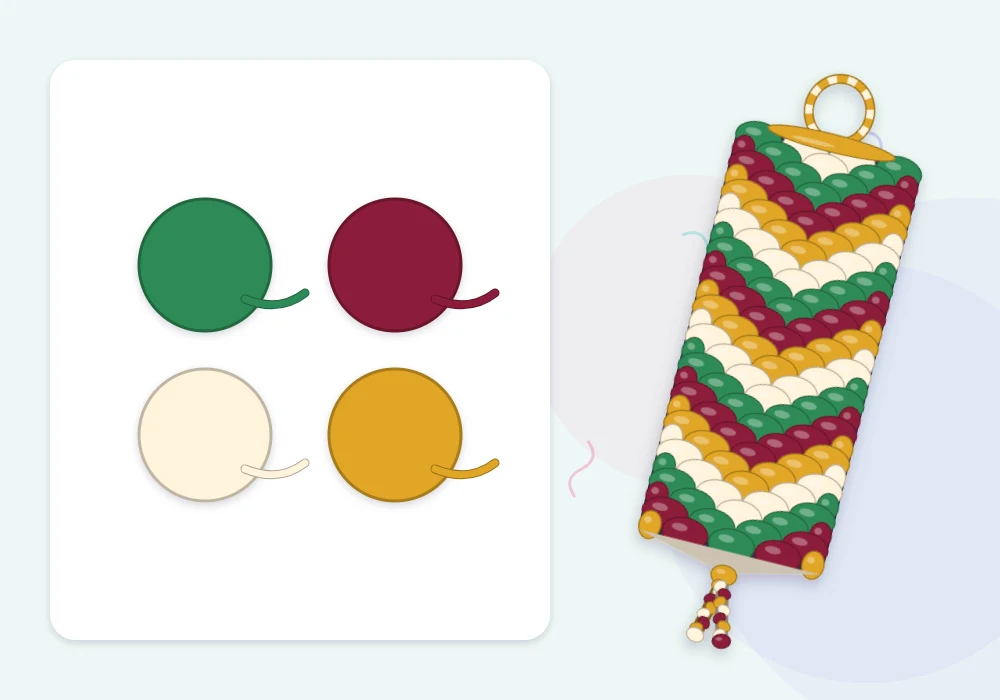
- Evergreen and Berry as a chevron. Arrange one half as forest, burgundy, cream, gold and let the pattern mirror it. The pointed rows suggest evergreen branches without drawing anything. The chevron friendship bracelet tutorial has the full method.
- Frosted Window as diamonds. Pale colors can look washed out in plain stripes. A diamond pattern gives them structure, with white or silver in the center of each diamond like a pane of ice.
- Spiced Cider as wide horizontal bands or a simple braid. Earthy colors look best in generous blocks, and a braid is fast when a whole batch is needed.
- Midnight Sparkle as a narrow chevron. Keep charcoal as the main color and use gold and silver for one row each, so the bracelet stays elegant instead of busy.
Adding sparkle without frustration
Metallic floss is tempting at this time of year, but it behaves differently from cotton. It is stiffer and more slippery, knots tend to loosen, and the ends fray quickly. Three habits make it manageable:
- Use it for one or two accent strings and keep the rest of the bracelet in ordinary 6-strand cotton floss.
- Cut metallic strings a few inches longer than the others, since frayed ends have to be trimmed as the work goes on.
- Pull each half hitch firmly and check the previous row before starting the next.
A plain cotton floss in a gold-yellow or pale gray gives a similar effect with none of the trouble, and it is the easier option for a first seasonal project.
Watch out
Deep reds, burgundy and dark greens are the shades most likely to release a little dye when wet, and winter palettes often place them next to white or cream. If the floss is of unknown quality, dampen a short piece and press it on white paper towel before knotting a gift with it.
Choosing colorfast thread from the start avoids the problem; see the best thread for friendship bracelets for what to look for.
Sizing a bracelet for someone else
A gift bracelet usually has to be made without measuring the wrist it is for. The safest approach is to knot a slightly short patterned section and let long ties make up the difference.
| Recipient | Knotted section (rough guide) |
|---|---|
| Child | About 5 in (13 cm) |
| Teen or adult with a slim wrist | About 5.5-6 in (14-15 cm) |
| Adult with a larger wrist | About 6.5-7 in (17-18 cm) |
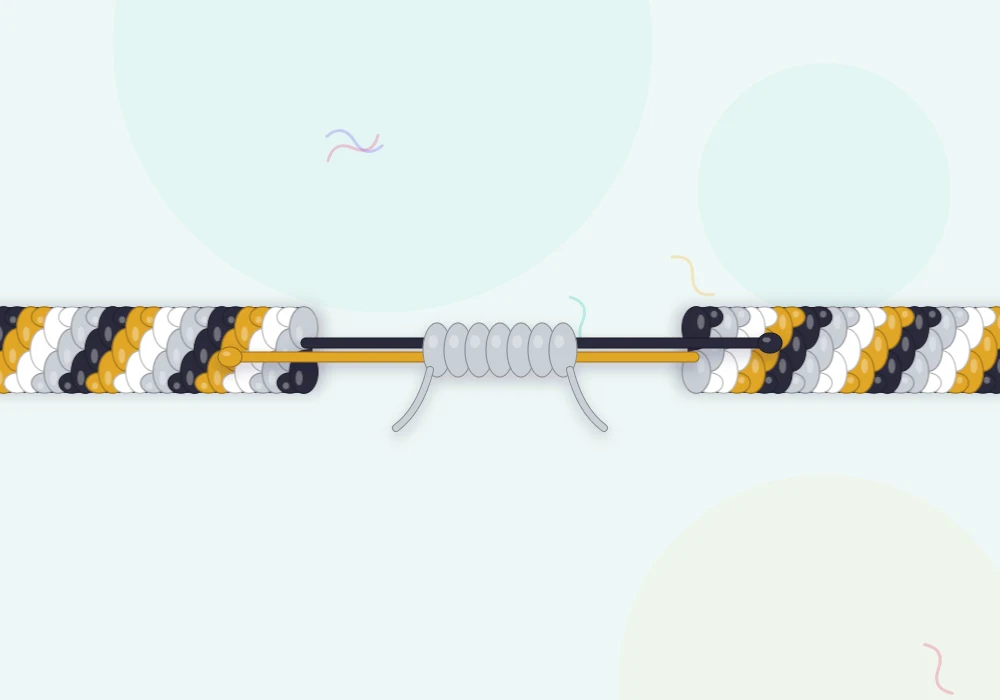
Finish each end with a braided tie at least 3-4 in (8-10 cm) long. Ties of that length let the same bracelet close comfortably on wrists of quite different sizes, and they can be trimmed once the bracelet has been tried on. For a gift that slips on and off without retying, an adjustable friendship bracelet closure such as a sliding knot is worth the extra ten minutes.
Making a batch in time
Bracelets take longer than they look, so count backward from the date they are needed. As estimates, a three-strand braid takes about 15-20 minutes, a six- or eight-string diagonal stripe about 2-3 hours, and a chevron or diamond about 3-4 hours for someone still learning it.
- Cut and bundle the strings for every bracelet in one session, so each later sitting is pure knotting.
- Reuse one palette across several patterns. The gifts look related but not identical, and less floss is left over.
- Make the most complex bracelet first, while there is still time to redo it.
Tip
To present a bracelet, cut two small notches in opposite edges of a piece of plain card, lay the bracelet across the front and tuck the ties into the notches. It stays flat in an envelope and the pattern is visible the moment the card is opened.
Wearing bracelets in winter
Cotton bracelets cope well with cold weather, but they spend the season under cuffs and gloves. Trim the ties short enough that they do not catch on knitwear, and choose a flatter pattern such as stripes or a chevron for anyone who wears snug sleeves. A bracelet that gets soaked by snow or rain should be patted dry and left flat, not twisted, so the knots keep their shape.
Frequently asked questions
What colors work for winter holiday friendship bracelets?
Deep green with burgundy, cream and gold is the traditional choice. Pale blues with silver and white, red and white with mint, or charcoal with gold and silver give a seasonal look without red and green.
How long should a friendship bracelet be when it is a gift?
As a rough guide, knot about 5 in (13 cm) for a child and 5.5-7 in (14-18 cm) for a teen or adult, then add braided ties of 3-4 in (8-10 cm) at each end so the fit can be adjusted.
Can metallic thread be used in a friendship bracelet?
Yes, but it is stiffer and more slippery than cotton and frays at the ends. It is easiest to use as one or two accent strings alongside regular cotton floss.
How far ahead should holiday bracelets be started?
A knotted bracelet takes roughly 2-4 hours depending on the pattern, so allow at least one evening per bracelet and start with the most complex one.