Diagonal Stripe Bracelet Pattern: Uneven Widths, Accent Lines and Direction
How to design diagonal stripe bracelets by changing the string order: stripes of different widths, single-string accent lines and rows that lean left, with three original layouts to knot.

Tutorial at a glance
Materials
- Embroidery floss in 3-4 colors, including one accent color
- Scissors
- Ruler or tape measure
- Tape, a clipboard or a safety pin
- Paper and pencil for planning the order
A diagonal stripe bracelet pattern is designed before the first knot is tied, because the order of the strings on the tape is the whole design. The knotting never changes: one string at a time crosses the band, row after row. What changes is how many strings of each color sit side by side, where a single contrasting string is slipped in, and which edge the rows start from. This guide covers those three choices and gives three original layouts to knot.
The string order is the pattern
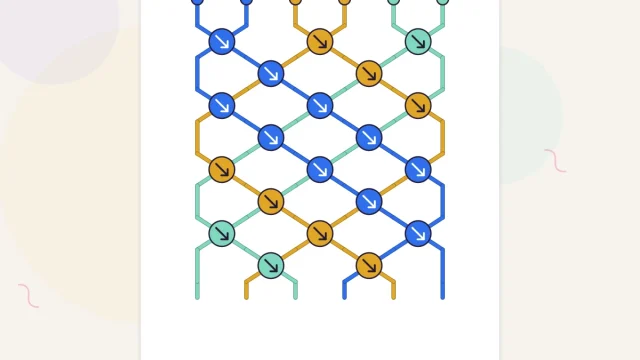
Diagonal stripes use the same structure as the candy stripe friendship bracelet: the leftmost string ties forward knots across all the others, then the new leftmost string does the same. Each string therefore produces exactly one slanted row of knots in its own color before the next string takes over.
That gives a simple planning rule. Write the strings down from left to right, then read the same list from top to bottom: it is the sequence of rows that will appear along the bracelet. Eight strings make an eight-row repeat, after which the strings hang in their starting order and the sequence begins again.
Uneven stripe widths
Neighboring strings of the same color merge into one stripe, so the width of a stripe is the number of strings in its group. One string makes a one-row line, two make a standard stripe, and three or four make a broad band. Mixing group sizes is what stops a diagonal bracelet from looking like a plain repeat of equal bars.
- Stepped widths. Groups of one, two and three strings in related shades read as a stripe that grows wider, then snaps back.
- One dominant band. Give half the strings to a single color and split the rest between two or three others.
- Two-tone bands. Place two close shades side by side with no divider and they blend into one wide, shaded stripe.
Six to ten strings is a comfortable range. Each extra string widens the band and adds one more knot to every row, so wide layouts take noticeably longer per inch. All the strings do the same amount of work, which means they can all be cut to the same length: about 36 in (91 cm) each for eight strings, and a little longer for ten.
Thin accent lines
A single string between two wider groups knots up as a pinstripe. It is the cheapest way to change the character of a bracelet, since it adds only one string and one row per repeat.
An accent line needs contrast in lightness, not just in hue. A pale line on dark stripes or a dark line on pale ones stays crisp, while a mid-tone line between mid-tone stripes tends to disappear at arm’s length. Metallic-looking shades such as gold and silver work well here because one row is enough for them to catch the eye.
Placement matters as much as color:
- Between two different colors, the line acts as a border and keeps the stripes from bleeding into each other visually.
- Inside one color, with strings of that color on both sides, it splits a broad band in two.
- Two single strings in different colors, side by side, make a double pinstripe that looks finer than either line alone.
Tip
Before cutting, lay the skeins or bobbins on a table in the planned order and step back. If the accent color is hard to pick out from across the room, it will be hard to see as a one-row line too.
Three original layouts to try
Each layout below lists the strings from left to right as they are taped down.
| Layout | String order | Result |
|---|---|---|
| Harbor Pinstripe (8 strings) | Navy, navy, navy, gold, navy, navy, navy, white | Broad navy bands divided by alternating gold and white lines |
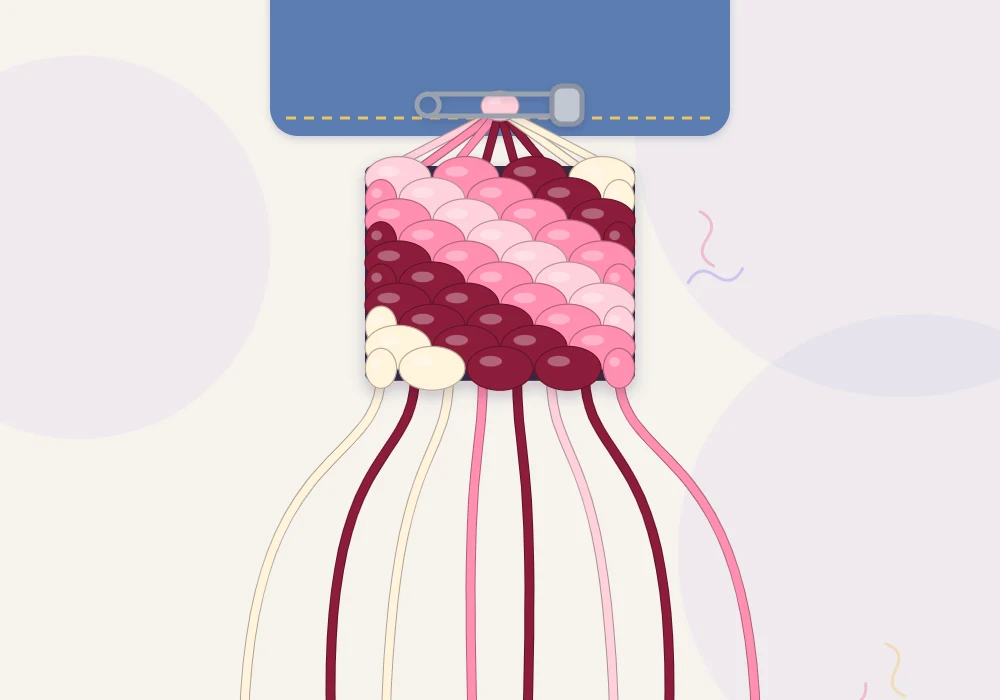
| Berry Steps (8 strings) | Blush, rose, rose, burgundy, burgundy, burgundy, cream, cream | Pinks that widen from a line to a band, with a cream stripe as a rest |
| Left-Leaning Meadow (7 strings) | Forest, forest, forest, lime, sand, sand, lime | A sand stripe edged in lime beside a wide forest band, knotted from the right |
Harbor Pinstripe shows how little color a design needs: six of its eight strings are navy. Berry Steps depends on the three pinks being clearly different in depth, so choose them together. Left-Leaning Meadow uses an odd number of strings, which is perfectly fine for diagonal stripes because nothing has to be mirrored. For more ready-made palettes, see the collection of friendship bracelet color combinations.

Changing the direction of the stripes
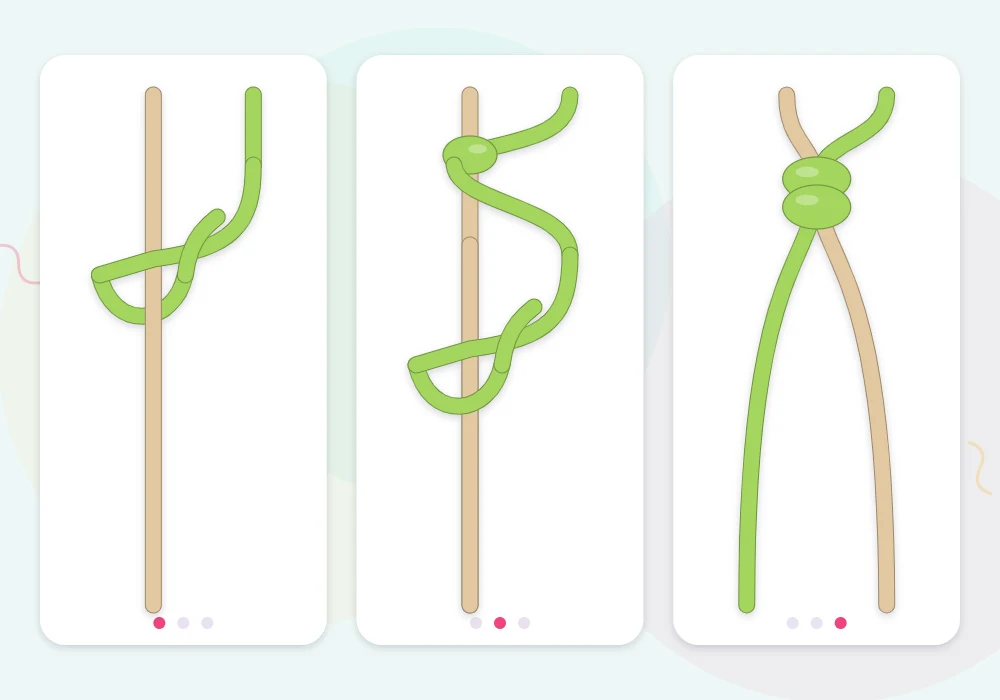
Stripes made with forward knots slope down toward the right. To make them slope down toward the left, mirror the whole process: pick up the rightmost string and tie backward knots across to the left edge, then repeat with the new rightmost string. The backward knot guide explains the reversed hand position.
The reading rule flips as well. With backward rows the rightmost string knots first, so read the string list from right to left to see the order of the stripes. In Left-Leaning Meadow that means a lime line, two rows of sand, a second lime line, then three rows of forest.
Direction can also change partway through a bracelet. Knot a full repeat with forward rows, then switch to backward rows, and the stripes fold back on themselves. That structure has its own tutorial, the zigzag friendship bracelet pattern, which covers how to turn the rows cleanly.
Watch out
Do not mix forward and backward rows at random. Every row in a section has to start from the same edge, or the strings fall out of order and the stripe widths stop matching the plan.
Planning a layout of your own
- Pick a string count. Eight is a good default; seven or nine work just as well.
- Choose two or three main colors and one accent. Decide which color gets the widest band.
- Assign group sizes. Aim for at least two different widths, and use the accent as a single string.
- Write the order down and read it top to bottom as rows. Check what happens where the end of the list meets the beginning, because the last and first groups sit next to each other in the finished bracelet. Matching colors there merge into one wider stripe.
- Knot one full repeat before judging it. A layout rarely looks like much until every string has had its row.
If the test repeat disappoints, the fix is usually one swap: trade a mid-tone string for a paler or darker one, or move the accent so it sits between the two colors that looked muddy together.
Frequently asked questions
How do you make one stripe wider than the others?
Place more strings of that color side by side. Each string knots one row, so three neighboring strings of one color make a stripe three rows wide.
How do you add a thin line to a diagonal stripe bracelet?
Put a single string of a contrasting color between two wider groups. It knots up as a one-row pinstripe once per repeat.
How do you make diagonal stripes slant the other way?
Start every row with the rightmost string and tie backward knots across to the left edge. The stripes then slope down toward the left.
Does a diagonal stripe bracelet need an even number of strings?
No. Nothing is mirrored in this structure, so seven or nine strings work as well as six or eight.